Standard Packing List
Gear
- Helmets
- Water Bottles
- Bike Locks (cable not U)
- Bike Gloves
- Bike Shoes, preferably ones that are walkable
- We strongly recommend SPD mountain bike shoes with recessed cleats
- If you are using road shoes with exposed cleats, please check them for wear and replace as necessary, we also recommend that you bring a pair of flip-flops or lightweight sneakers/slip-ons as the mid-ride interludes/stops will include walking on cobblestones, stone stairways, etc.
- Pedals, even if you’re renting, you’ll want pedals that match your cleats
- GPS Unit (please see our list of Supported GPS Units)
- Smart Phone – check with your carrier for available travel plans, you will want one working phone per bike in case you need to summon an SOS van
- Sunglasses – ones designed for cycling will be more comfortable for all day cycling
- Flat Repair Kit – if you prefer to use a CO2 Injector instead of a hand pump, our mechanics will have CO2 Cartridges available for purchase as you will not be able to fly with them.
Bike Clothing
Your Cruise Updates Page will provide a more customized packing list suitable for the particular cruise region and month, but here is a list of the usual suspects for Warm Weather Cycling:
- 3 Pairs of bike shorts, invest in good quality, you’ll thank us later
- 3 Jerseys
- 3 pairs of socks
- Layers and a windbreaker is the key to all day comfort
- If you are participating in a Cycling PreTour, we’ve found it’s best to bring an additional 2 sets of: shorts, jerseys, and socks.
Colder Weather? While not typically necessary, if we expect cooler weather during your cruise we will let you know via your cruise updates page prior to the event. In this case, you will also want to pack these items in addition to the Warm Weather kit listed above:
- Windbreaker (Preferably waterproof/water-resistant), no need for a full rain-suit.
- 2 Pairs of long sleeves (full jersey or the sleeves to wear with a short sleeve).
- 2 Pairs of leggings/tights (we prefer to wear the ones without the padding over regular bike shorts, that way you can strip them off in the middle of the day if you get too warm).
- 2 Pairs of Insulating layers to wear under your jersey if we have an extra chilly morning.
- No need for full thermal suits.
- If you suffer from cold hands or a cold head, bring a beanie to pull over your ears or full-finger gloves.
Summer Heat? If we expect higher than normal temperatures for the region, or if you are more susceptible to the temperature fluctuations, we strongly recommend that you bring the following items:
- Hydration Powders
- LMNT, Liquid IV, and Gatorade are great options
- Protein Bars or Small Snacks
- Protein for endurance and/or sugar for a pick me up
Definitely consider these Summer Heat suggestions listed above if you’re traveling with us from June-August, or traveling with us during any time of the year in Tahiti, Vietnam, or Cambodia.
Other Clothing
- No need for formal wear at dinner, we go for a “country club casual”… your wife will appreciate it if you wear something better than a t-shirt to dinner.
Bringing your bike?
- Bring 2 spare tubes, a spare tire for any bike with wheels smaller than 26 inch, enough allen wrenches to assemble and adjust your bike, you won’t need to bring your own floor pump or pedal wrench.
- CO2 Cartridges cannot be brought on an airplane, and will cause you to have problems with TSA. Our mechanics will have them for sale, and will buy back unused cartridges for 1/2 price.
Renting a bike?
- Bring your own helmet, water bottles, & cable lock
- Flat Repair Kit: Not included in your rental. You’ll need to bring your own, or purchase one from the rental company.
- Do you use cleated bike shoes? Bring your shoes & your pedals—our mechanics can install the pedals on your rental bike for you.
To Cleat or Not To Cleat?
As mentioned above, we strongly recommend that you wear SPD Mountain Bike Shoes with Recessed Cleats.
Why Mountain Bike Shoes?
- Bike-specific shoes have stiffer soles and better support, so more of your effort goes into the pedals instead of flexing and fatiguing your feet. They also offer better grip, protection, and control on the bike.
- We like mountain bike shoes with recessed cleats over normal bike shoes with exposed cleats for our adventures. Mountain bike shoes give you the stuff efficient pedaling you want on the bike, but with treaded walkable soles that make sightseeing, cafe stops, and castle tours comfortable and safe. They’re the ideal balance between performance and all-day versatility on a cycling vacation.
Why Cleats?
- Cleats dramatically improve power transfer and efficiency—every pedal stroke becomes smoother, more controlled, and more effective.
- Cleats increase stability and confidence, keeping your foot perfectly positioned so you can ride longer with less fatigue.
Is Your Bike Ready?
Unless you’ve already had your bike serviced this season, please take care of this before leaving for your cruise. It’s important to have your bike serviced and inspected before it gets packed. Short on time? The same mechanic can also help you pack your bike.
Arriving with a bike that hasn’t been recently serviced could cause you to lose days of cycling while trying to find a shop that can take care of your needs. Components and good tires are expensive while abroad.
Spare Disc Brake Pads – Bring an extra set, we find that many participants can burn through a set of disc brake pads during a week of riding, especially on a tandem.
Are You Ready?
Here is a helpful guide to training for your upcoming vacation.
Why do I need to train for my vacation?!
The further you can comfortably ride means you can take on our longer routes and have time to enjoy more daily content, activities, and route stops each day.
Santana Adventures Traditions
Every Santana Adventures cruise blends cycling, culture, and camaraderie. Over the years, we’ve developed a handful of fun traditions—some planned, some spontaneous—that have become part of what makes each trip memorable. These traditions bring our participants together in ways that go beyond cycling.
We ask that all of our participants read our Santana Traditions.
Cell Phones & Connectivity
It is best that you bring your own phone that will work on the European GSM networks. Most current Androids and iPhones have “global” capability. “Global” is the keyword here.
Cruise ships offer Wi-Fi (usually a paid service), which is expensive and slow. If you need a fast connection (and are on or near shore), the best method is your phone and an international calling/data plan, which most top-tier carriers (Verizon, AT&T, & T-Mobile) offer as a $10 per day upgrade for your current plan. Call your provider (or check their website) to make sure your phone and plan will work in all of the countries you’ll be traveling to.
SIM Cards are often more than $10 per-day if you also use data, and often make it difficult for family or friends to reach you from back home. We only recommend using a Prepaid SIM Card if you are traveling in a country that is not supported by the Travel Pass feature offered by most carriers.
Trac phones, prepaid plans, and “why pay more” carriers generally do not offer international plans or options.
Tag & Track your Bikes & Luggage
We strongly recommend taking extra precautions with your luggage. Three steps you can take to help yourself if a bag/bike becomes delayed or lost:
- Put an Apple Airtag (or Galaxy SmartTag if you have an Android) in each checked bag or bike case. We’ve used the Apple Airtags personally, and they’ve been a great help on our recent trips. Our team hasn’t personally used the Galaxy SmartTags but we’ve heard good things from participants.
- Take a photo of each bag/case PRIOR to checking it.
- Make sure you attach 2 luggage tags with your contact information on each checked bag. The paper tags are notorious for falling off, so we double up.
Disclaimer: AirTags & SmartTags are not 100% accurate or infallible. They use bluetooth to connect to passing phones which then provide GPS coordinates for the tag to their network. We like to use them because they do offer significantly more information on your bike/luggage’s location, and only cost about $29 each.
GPS Guidance
We use Smartphones and/or Garmin GPS Units to make your cycling experience the very best. No more fumbling with route sheets or trying to figure out what turn you missed, a quick glance at your GPS unit and you know exactly where you are.
At each morning’s breakfast you’ll get a map (which is more of an illustration than a street map) charting the day’s cycling routes and recommended stops. During a brief route talk you’ll hear about each route’s attractions. Using your GPS unit you’re able to select that day’s Short, Medium, or Long rides and ride at your own pace. If you want to ride with friends, great! Want to stop for a croissant and coffee? Go for it! Through use of GPS, you’re the leader of your own ride.
Santana’s vets have learned to love and rely on our GPS Routing.
Santana supplies free electronic mapping and route files. Simply select the route and follow the highlighted map. Smartphones and numerous Garmin units are supported. Is your phone or Garmin supported? Please read our GPS Guide for all of the details on making sure you are properly equipped for your upcoming cruise.
Smartphone Apps
Our Event Apps Page has all the info you’ll need (and download links) for the Apps that we strongly recommend you download and acquaint yourself with before leaving for your cruise. Including apps for Navigation, SOS Communications, and syncing your Garmin to your phone.
Power Adapters & Converters
MOST cell phones (and ALL Apple Products) have chargers that are capable of utilizing up to 220v, just take a look at the fine print written on the device or its charger to make sure it’s labeled 110v-220v. If the labeling is present, all you’ll need is a simple plug adapter. You can find them on Amazon for about $3 each.
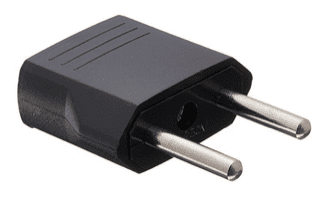
This is the EU Adapter Plug (shown above) that you’ll be able to use across MOST of the EU. We’ll include info on any adapter plugs you’ll need in a pre-cruise update.
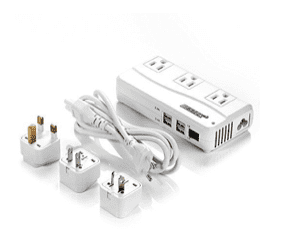
If your device or its charger is only labeled for 110v, you’ll need a voltage converter. The inexpensive “travel converter” (shown above and available through Amazon) is only suitable for low-wattage items that can’t produce enough heat to burn your fingers.
Do not bring a hair dryer or curling iron from home. Plugging heat-producing items into a 220v outlet adapter or low-grade voltage converter can cause your 110v appliance or an inexpensive voltage converter to burst into flames. Every hotel that Santana books and every ship Santana charters will have a hair dryer supplied in their rooms.
Exchanging Money
You’ll find ATMs at the airport and all over the city, you can also exchange money at a bank, the hotel, or a currency exchange.
Typically the best rates are found at Bank ATMs, then Banks, and last hotels. Exchange kiosks can have good OR terrible rates, use them at your own risk.
E-Bikes and other Lithium Ion Batteries
According to the FAA: The maximum size for any Lithium-Ion Battery allowed aboard aircraft is 160 watt-hours, and each passenger may only carry a maximum of 2 lithium-ion batteries rated between 100 and 160 watt-hours.
- Lithium-ion batteries must be in your carry-on luggage, any batteries in checked luggage will be confiscated (and possibly subject you to stiff penalties).
- 99.9% of Phones, Tablets, & Laptops are compliant.
- Nearly all external “back up batteries” are compliant. If you plan on bringing one, please verify it is under 160 watt-hours.
- Nearly every E-Bike battery we’ve seen is well over 400 watt-hours.
Here are the FAA’s guidelines on flying with batteries:
https://www.faa.gov/hazmat/packsafe/more_info/?hazmat=7
Here is the FAA’s illustrated guide:
https://www.faa.gov/hazmat/packsafe/resources/media/Airline_passengers_and_batteries.pdf
“Newer lithium ion batteries have the watt hour (Wh) rating marked on them. To calculate watt hours, multiply the battery voltage by the Amp hours (Ah).”